


Jun 9, 2026, 4:00 PM
Diagnosing Nutrient Deficiencies in Field Crops
A critical step in diagnosing nutrient deficiencies is understanding how specific nutrients function within a plant. Nutrients are classified as either mobile or immobile based on their capacity to move through the plant's vascular system (specifically, the phloem):
- Mobile Nutrients: When a deficiency occurs, the plant can scavenge these nutrients from older, lower leaves and relocate them to new, actively growing tissues. Consequently, deficiency symptoms appear first on the older leaves.
- Immobile Nutrients: These elements cannot easily move from older leaves to newer growth. As a result, deficiency symptoms manifest first in the youngest, newest growth.
Field-Level Diagnosis and Environmental Factors
When diagnosing symptoms, evaluating patterns across the entire field is essential. Unless a deficiency is severe, symptoms are typically sporadic rather than uniform.
Identifying the underlying cause of a deficiency is equally vital. While weather events heavily influence nutrient uptake, other common culprits include:
- Low soil nutrient reserves
- Soil texture constraints
- Improper pH levels
- Soil compaction
Agronomists must also consider the field's environmental history and past nutrient management. Unfortunately, deficiencies are rarely detected until visual symptoms appear on the plant, at which point yield potential may already be compromised.
Proactive Management: Soil and Tissue Testing
Crop planning for the upcoming season should begin immediately following harvest. Soil samples collected in the fall or early spring provide a foundational baseline of nutrient availability, allowing growers to tailor fertility plans to the specific needs of the next crop. However, because environmental conditions fluctuate and deeply impact uptake, soil tests alone do not guarantee success.
Tissue testing throughout the growing season offers significant value by uncovering underlying deficiencies before visual symptoms and subsequent yield detriments occur. If a deficiency is caught early, corrective actions can minimize economic losses.
In-Season Correction and Nutrient Removal
When an in-season deficiency is identified, prompt intervention is critical to safeguarding final yields. The method of application depends on the type of nutrient needed:
- Macronutrients: Required in large quantities, these are typically applied using a fertilizer spreader, injected via side-dress applicators, or fertigated through irrigation pivots.
- Micronutrients: Because they are required in much smaller quantities, these are often best delivered as foliar treatments via a sprayer, allowing the leaves to absorb the nutrients directly.
Replenishing soil nutrients post-harvest is a fundamental practice for maximizing long-term yields. Crop removal rates dictate replenishment needs; for example, grain corn removes a substantial amount of nutrients from the soil per bushel harvested:
|
Nutrient |
Soil Removal Rate |
|
Nitrogen (N) |
0.615 lbs/bu |
|
Phosphorus (P) |
0.428 lbs/bu |
|
Potassium (K) |
0.273 lbs/bu |
(Source: Heckman et al., 2003)
Ultimately, balancing the soil with the precise amount of nutrients required to sustain the crop is the key to success. Growers should utilize available diagnostic tools, soil testing, and tissue sampling, and consult a local agronomist to address specific concerns regarding field crop deficiencies.
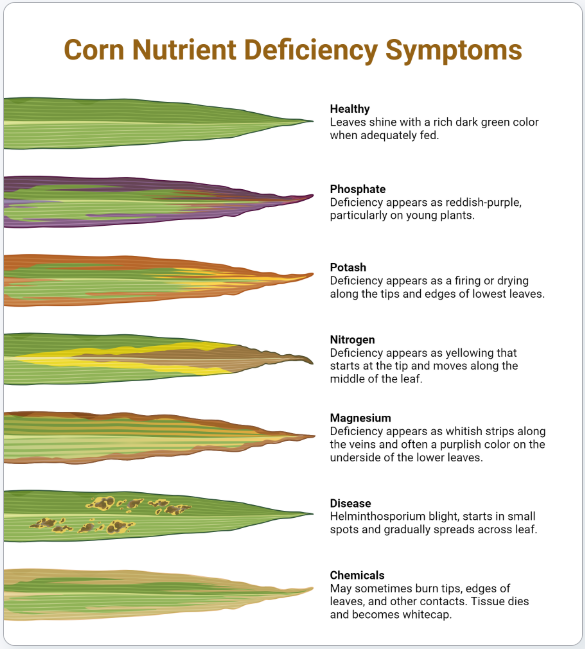
Below are examples of the most common deficiencies in corn and soybeans with visual symptoms:
Soybean Nutrient Deficiency Symptoms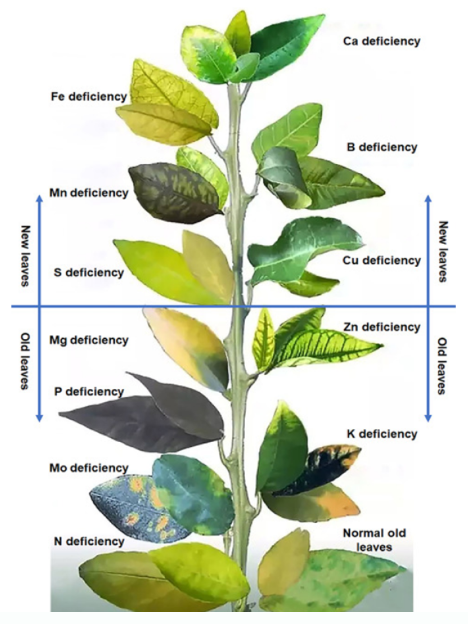
References
- Heckman, J. R., Sims, J. T., Beegle, D. B., Coale, F. J., Herbert, S. J., Robison, T. W., & Bamka, W. J. (2003). Nutrient removal by corn grain harvest. Agronomy Journal.
- Iowa State University Extension and Outreach. Soil Science and Plant Analysis.
- Michigan State University Extension. Crop Nutrient Management.
- Texas A&M AgriLife Extension Service. Managing Crop Nutrients.
- University of Florida IFAS Extension. Visual Symptoms of Plant Nutrient Deficiencies.
- University of Nebraska–Lincoln Extension. Nutrient Management for Field Crops.
- University of Wisconsin–Madison Division of Extension. Soil Science and Plant Nutrition.
- BioRender. (n.d.). Corn nutrient deficiency symptoms template. https://www.biorender.com/template/corn-nutrient-deficiency-symptoms
- Smart Fertilizer Software. (n.d.). Visual diagnosis of nutrient deficiency. https://i-plantnutrition.com/articles/visual-diagnosis-of-nutrient-deficiency.html
- Pioneer Agronomy. (n.d.). Water and nutrient uptake in corn. https://www.pioneer.com/us/agronomy/water-nutrient-uptake-corn.html