


Jan 30, 2026, 9:00 AM
Phosphorus Optimization & Management Practices
Understanding Phosphorus Availability
Recently, I visited with a grower to review his fertility program. He had been heavily investing in his fields through manure and commercial fertilizer applications. His biggest concern was that soil tests were showing good phosphorus levels on the Bray-1 test and high levels on the Olsen test. Despite these results, he was still seeing phosphorus (P) deficiency symptoms in his crops and was not achieving the yield he expected.
Even though his soil test P levels were adequate, much of the phosphorus was being tied up in the soil, creating a nutrient-deficient environment for the crop. In this article, we’ll review some basic phosphorus concepts and discuss management tools that can help improve phosphorus availability.
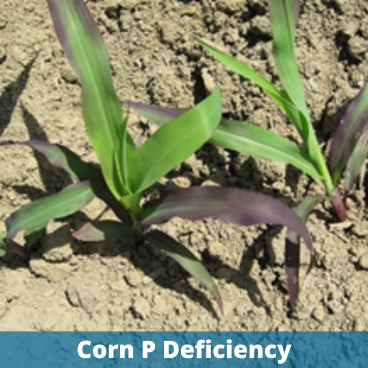
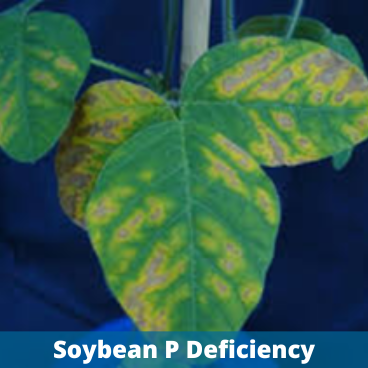
The photos below show common phosphorus deficiency symptoms in corn and soybeans.
General Information About Phosphorus in Soil
Soil phosphorus exists in two forms: organic and inorganic. Plants can only utilize the inorganic form. Organic phosphorus can eventually convert to inorganic phosphorus, allowing it to become available to the crop over time.
Soil pH plays a major role in how phosphorus should be managed. There are two primary soil tests used to evaluate phosphorus availability:
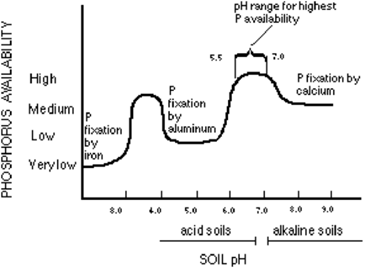
- Bray-1 Test: Recommended for soils with a pH below 7.4. In low-pH soils, phosphorus reacts with iron (Fe) and aluminum (Al) to form aluminum phosphate, which is unavailable to plants.
- Olsen Test: Recommended for soils with a pH above 7.4. In high-pH environments, phosphorus binds with calcium (Ca) to form calcium phosphate, also making it unavailable to the crop.
For a more complete picture of phosphorus availability, I recommend running both tests when sampling your soil.
Managing Phosphorus to Maximize Your Fertilizer Investment
So how can phosphorus be managed to better utilize your fertilizer investment?
One key strategy is managing soil pH. Adjusting soil pH into the ideal range of approximately 6.0 to 7.0 can help break phosphorus bonds and improve availability. Liming acidic soils can help raise pH, but it requires an investment and is not an instant fix. Soil pH cannot be completely changed overnight, and results take time.
Another approach is improving soil health by introducing beneficial microbes that help convert fixed phosphorus into plant-available forms. Using proven products, such as Nutriquire + Terrasym applied in the planter box at planting, can help enhance nutrient uptake and overall crop performance.
Every field and region is different, but these management tools can help make your soils more productive and allow you to better utilize the phosphorus already present in your fields.